Store/Help Guides/Fire Alarm Buying Guide
We fit domestic fire alarm systems across London every week, and the same questions come up on almost every job. This guide answers them in the order you need: what the law and the standard ask for, which type of alarm suits each room, mains or battery, how to interlink, and where to position everything. Every product mentioned is in our fire alarm range.
1. The standard and the law
Domestic fire detection in the UK is designed to BS 5839-6, the code of practice for fire detection and alarm systems in dwellings. It is not itself law, but Building Regulations (Approved Document B in England and Wales), the Smoke and Carbon Monoxide Alarm Regulations for rented homes and every housing provider and insurer point to it. The standard describes a system in two words: a grade that says how the alarms are powered and a category that says how many rooms are covered. A typical specification reads “Grade D1, Category LD2”.
In Scotland every home, owned or rented, has needed interlinked alarms since February 2022. In Wales rented homes need mains interlinked alarms. In England the rules currently apply to rented homes, new builds and building work that needs Building Regulations approval, but an interlinked system is the right answer everywhere.
2. Grades: how the alarm is powered
| Grade | What it means | Typical product |
|---|
| Grade A | Full panel based system with separate detectors and sounders. Used in large HMOs and shared houses. | Commercial panel systems, quoted separately |
| Grade D1 | Mains powered alarms with a tamper proof standby supply that lasts the life of the alarm. The normal specification for new builds, loft conversions and rented houses. | Ei3016 Optical Smoke Alarm, Ei3014 Heat Alarm, Ei3024 Multi-Sensor Fire Alarm |
| Grade D2 | Mains powered alarms with a user replaceable back up battery. | Older Ei140 style alarms, now largely replaced by D1 |
| Grade F1 | Battery alarms with a tamper proof sealed battery that lasts the life of the alarm, usually ten years. | Ei650i Battery Smoke Alarm, Ei650iRF Wireless Battery Smoke Alarm, Ei603TYC Battery Heat Alarm |
| Grade F2 | Battery alarms with replaceable batteries. Not acceptable for rented homes in most cases. | Basic 9 V alarms, not stocked |
3. Categories: how many rooms
- LD3: alarms in the escape routes only, meaning the hall and each landing. The legal minimum for many existing homes and the least protection.
- LD2: escape routes plus the rooms where fires most often start, normally the living room and kitchen. This is the standard we fit in most homes.
- LD1: an alarm in every room and circulation space except bathrooms and toilets. Recommended for larger houses, houses with elderly or disabled occupants and HMOs.
Carbon monoxide alarms sit alongside the category: fit one in every room with a boiler, gas fire, wood burner or open fire, and we recommend one near sleeping areas if the boiler is in a hall cupboard.
4. Which alarm in which room
For a quick start, our landlord flat kit and house kit bundle the right alarms for a Grade D1, LD2 system.
5. Mains or 10 year battery
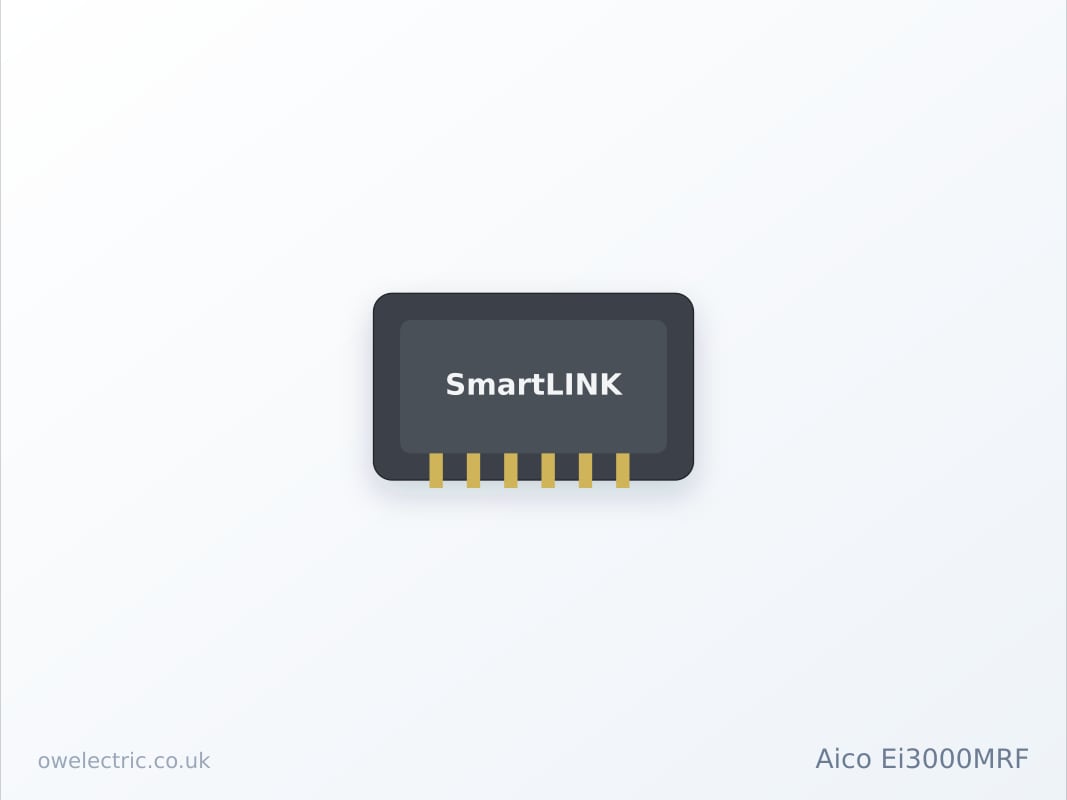
Mains alarms in the Aico Ei3000 series are wired to a lighting circuit and carry a rechargeable lithium cell that keeps them working through a power cut for the life of the alarm. They are the correct choice when the work is notifiable, when a landlord wants the strongest evidence of compliance, and whenever ceilings are already open. They also accept the Ei3000MRF SmartLINK Module module for wireless interlinking and remote monitoring.
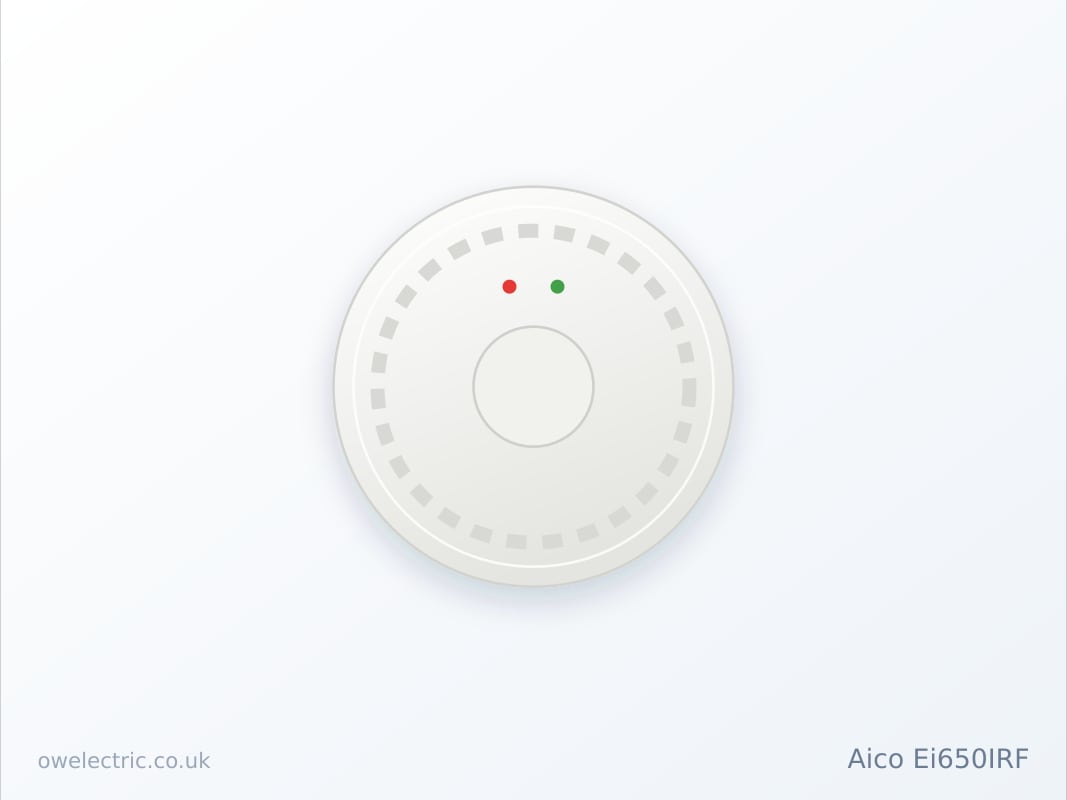
The Ei650 battery series gives ten years of protection with no wiring at all. Choose it for finished homes where chasing cables is not practical, for quick compliance in a flat, and as a first step you can upgrade later. Use the Ei650iRF Wireless Battery Smoke Alarm version if the alarms need to talk to each other.
6. Interlinking: cable or wireless
Interlinking means every alarm sounds when one detects a fire. Mains alarms are linked with a three core and earth cable daisy chained between them, up to twelve on one system. Where cabling is not possible, fit an Ei3000MRF SmartLINK Module module in each Ei3000 alarm and they link by radio. Battery systems interlink with the RadioLINK+ radio built into the Ei650iRF Wireless Battery Smoke Alarm.
Add an
Ei450 Alarm Controller controller to any wireless system. Mounted by the front door it tests every alarm, silences a nuisance alarm and shows which alarm triggered, which matters when fire and CO alarms share one system.
7. Where to position alarms
- Ceiling mount smoke and heat alarms at least 300 mm from walls and light fittings, ideally central in the room.
- Hall and landing alarms go within 3 m of every bedroom door and within 7.5 m of any room where a fire could start.
- Keep smoke alarms at least 3 m from kitchen doors and bathroom doors, and away from extractor fans and air conditioning.
- Heat alarms in kitchens can be closer to the cooker, but still 300 mm from walls and never directly above the hob.
- CO alarms sit 1 to 3 m from the appliance, ceiling mounted 300 mm from walls, or wall mounted above door height and 150 mm below the ceiling.
- On sloping ceilings mount alarms 300 mm to 600 mm below the apex, never in the dead air space at the very top.
8. Landlords, HMOs and certificates
England’s regulations require at least one smoke alarm on every storey with living accommodation and a CO alarm in every room with a fixed combustion appliance, tested at the start of each tenancy. Licensed HMOs are normally required to have a Grade D1 system to LD2 or a Grade A panel system depending on size, set by the local authority licensing conditions.
When OW Electric installs a system we issue a BS 5839-6 Grade D certificate and an electrical installation certificate or minor works certificate for the wiring, which is what councils, letting agents and insurers ask for. Buy the alarms here and tick installation at checkout, or request a quote for a survey first.
9. Testing and replacement
- Press the test button on every alarm weekly, or use the Ei450 controller to test the whole system at once.
- Vacuum around the vents every six months so dust does not reach the sensor.
- Replace every alarm ten years after installation. The replace by date is printed on the unit.
- Never paint an alarm or cover it during decorating without removing it from its base.
10. Frequently asked questions
Do I need mains powered alarms or are battery alarms enough?
New builds, loft conversions, material alterations and most rented houses need Grade D1 mains alarms with a tamper proof back up, such as the Aico Ei3000 series. Existing owner occupied homes and many rented flats can use Grade F1 sealed 10 year battery alarms such as the Aico Ei650i, which are interlinked wirelessly with the Ei650iRF version.
How many smoke alarms do I need?
As a minimum, one smoke alarm on every storey in the circulation space (hall and landing), a heat alarm in the kitchen and a carbon monoxide alarm in any room with a boiler, gas fire or stove. That is Category LD2, the standard for most homes. LD1 adds an alarm in every room except bathrooms and is what we recommend for larger houses and HMOs.
Can I put a smoke alarm in the kitchen?
No. Cooking fumes and steam trigger smoke alarms constantly, so people disable them. Fit a heat alarm in the kitchen instead. It ignores fumes and reacts to a real fire at 58 degrees. Where the kitchen has a gas hob or boiler the Ei3028 combines heat and carbon monoxide sensing in one unit.
Do all my alarms have to be interlinked?
Yes for any system to BS 5839-6 and for rented property in Scotland and Wales. Interlinking means every alarm sounds when one detects fire, which is what wakes people upstairs when a fire starts downstairs. Interlink by cable using three core and earth, or wirelessly with the Ei3000MRF module or the Ei650iRF battery alarm, up to 12 devices on one system.
What do landlords in England have to provide?
Under the Smoke and Carbon Monoxide Alarm (Amendment) Regulations 2022 every rented home must have at least one smoke alarm on each storey with living accommodation and a carbon monoxide alarm in every room with a fixed combustion appliance other than a gas cooker. Faulty alarms must be repaired or replaced as soon as reasonably practicable once reported.
Where should a carbon monoxide alarm be placed?
In the same room as the appliance, between one and three metres horizontally from it, either on the ceiling at least 300 mm from any wall or on a wall above the height of doors and windows and at least 150 mm below the ceiling. Never inside a cupboard, behind furniture or next to an extractor fan.
How long do Aico alarms last?
Ten years from the date of installation. Every alarm has a replace by date printed on it, and mains alarms should be tested weekly with the test button and vacuumed gently every six months to keep the sensor clean.